Community · Contributions
From the Field.
Real school leaders. Real work. Real results. This is a living community of practitioners committed to making excellent Tier 1 instruction the center of their schools for children AND adults.
They share what they know so others can grow.
The best ideas for improving schools are already in schools. This is where they live.
FEATURED CONTRIBUTION
This month's featured voice from the field.
Just One Thing.
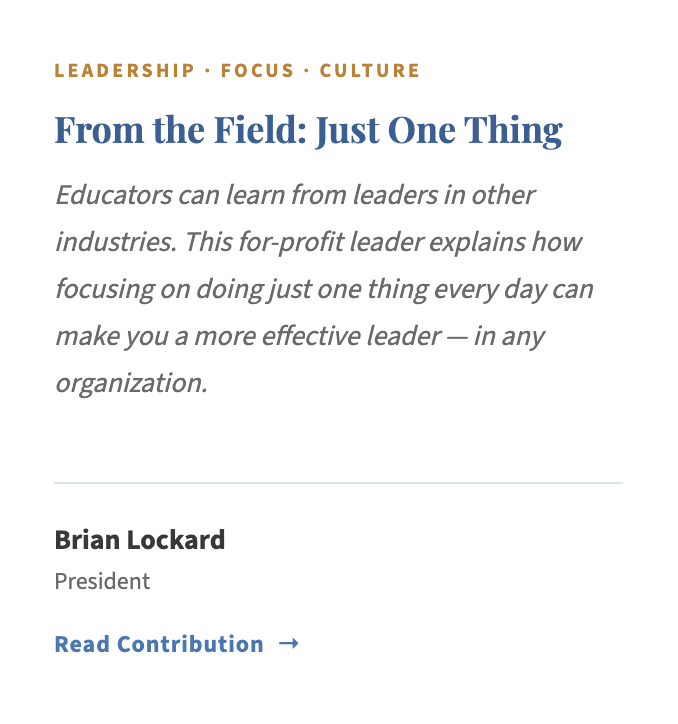
| Educators can learn from leaders in other industries. The for-profit leader below explains how focusing on doing just one thing every day can make you a more effective leader.
What if I told you that you could become a better leader without the long hours, back-to-back meetings, working lunches, and missed weekends that may have gotten you where you are today?
I made the leap from middle manager to CEO by founding a startup that took off during the pandemic. The company grew fast, and my mix of Protestant work ethic and relentless drive pushed me straight into the “startup grind” so often glamorized in the business press. I wore 80-hour weeks like a badge of honor while closing our first round of funding, worked through holidays and most weekends, and spent too many evenings on my laptop instead of being present with my wife.
At the time, I thought that’s what effective leadership required—being ten steps ahead, anticipating every issue, having the solution ready, and always saying yes to more work. Four years later, I sold the company to a larger strategic buyer. It was a tough deal: we were nearly out of cash, and the brand needed the stability of a bigger company. Friends offered condolences, but I was relieved. I was burnt out to a level I hadn’t thought possible.
Like many first-time leaders, I had fallen into the trap of believing that doing more was the key to being more effective. If you’re reading this, chances are you’ve faced similar pressures: an endless list of problems to solve, teammates needing help, and stakeholders with rising expectations.
Two years later, I became president of a fast-growing horticulture company. In the time between roles, I reflected deeply on what mattered most to me, the kind of leader I wanted to be, and how I could approach things differently.
My conclusion? Every day, my goal is to do just one important thing. That’s it—just one. I know it sounds counterintuitive. How can a leader with a mile-long to-do list and high expectations possibly focus on only one thing?
Think of it as intentional restraint. If you could only accomplish one thing each day, where would you put your focus? Would you cross off a task, clear your inbox, or jump to solve someone else’s problem?
By committing to just one thing a day, I realized I had to let go of the idea that my job was to “do the work.” So if not that—what should I actually spend my time on? The answer came when I began asking which activities created the greatest long-term impact. Once I framed it that way, the areas to focus on became clear.
First, being a coach to my team. Instead of solving problems for them, I focus on asking questions, offering perspective, and helping them build the confidence to solve problems themselves. Coaching multiplies capability across the organization.
Second, investing in culture. Culture isn’t a slide deck or a mission statement; it’s the daily experience of how people show up for each other. By protecting and shaping that environment, I help ensure the company can thrive long after any single decision I make.
Third, building trust. Trust is the currency of leadership. Without it, everything slows down. With it, people are more willing to take risks, share openly, and give their best effort. I try to earn that trust not through words, but through consistent actions over time.
These were the areas that mattered most to me. If you choose to embrace doing less to be more effective, your list may look different. What matters is that the activities feel authentic to your leadership style and that they drive meaningful results.
So let’s reframe the idea. Think back over the past year: how many truly important things did you accomplish—the kind that will still matter to your company years from now? Be honest.
Now imagine this: what if you could reliably accomplish up to 200 of those high-impact things every single year? That’s the power of focusing on one important thing each day. Not everything, not most things—just the right thing.
And here’s the bonus: your life gets better too. Since starting this new chapter, I haven’t worked more than 40 hours in a week. I’m home for dinner with my wife every night. I exercise daily. I feel happier and more energized than at any other point in my career.
That’s the real secret: by doing less, you create space to do what matters most—at work and in life.
CONTRIBUTOR
BRIAN LOCKARD
PRESIDENT, HEIRLOOM ROSES
ALL CONTRIBUTIONS
More voices from the field.
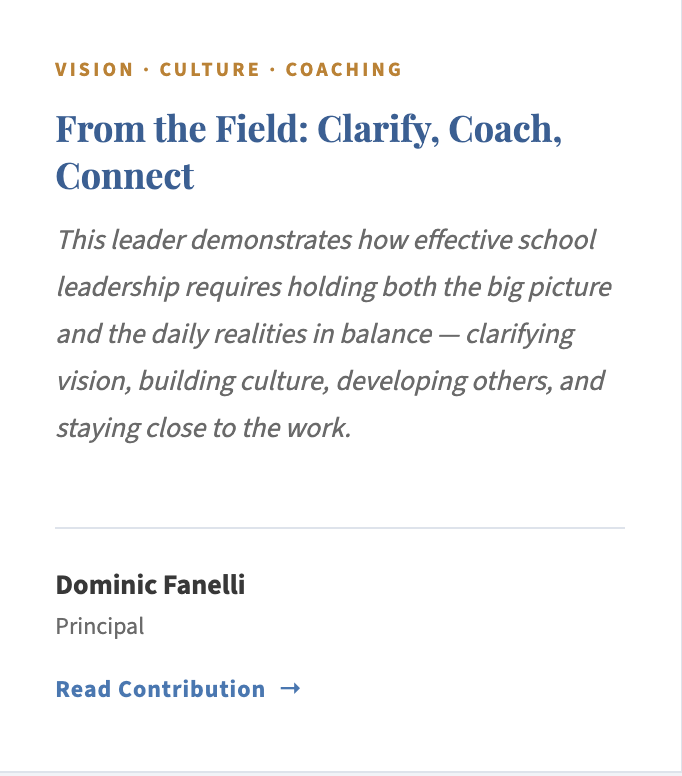
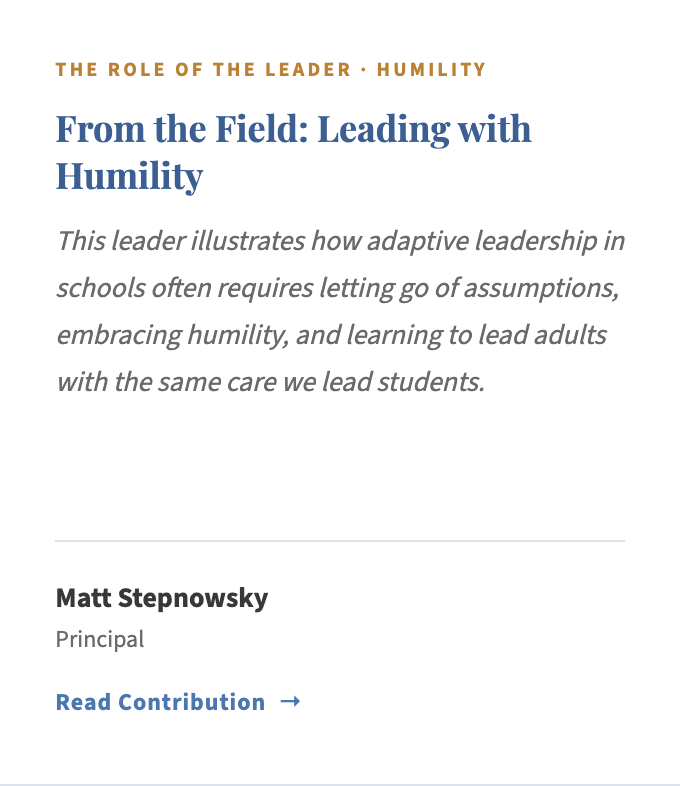
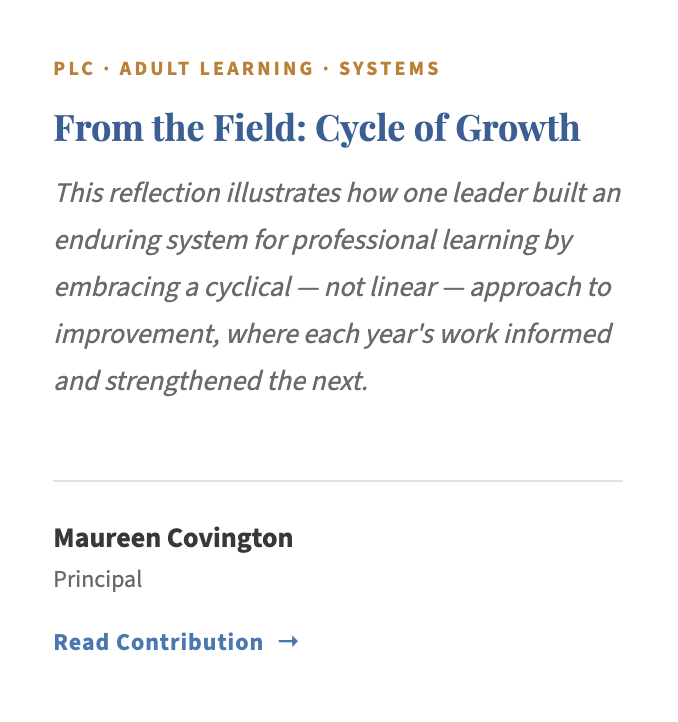
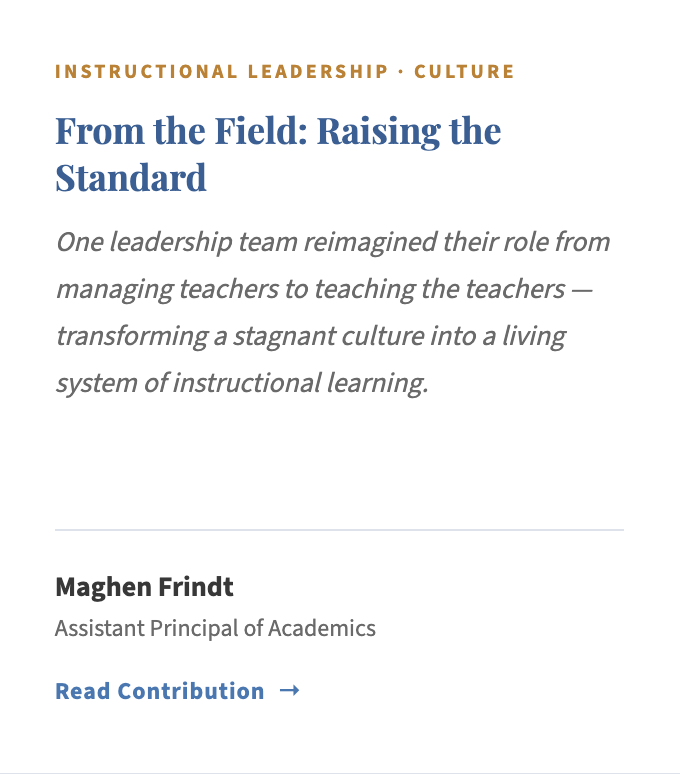
Every contribution below is written by a current or former practicing school or organizational leader — submitted, reviewed, and selected for the insight it offers to the Fix Your Tier 1 Community.
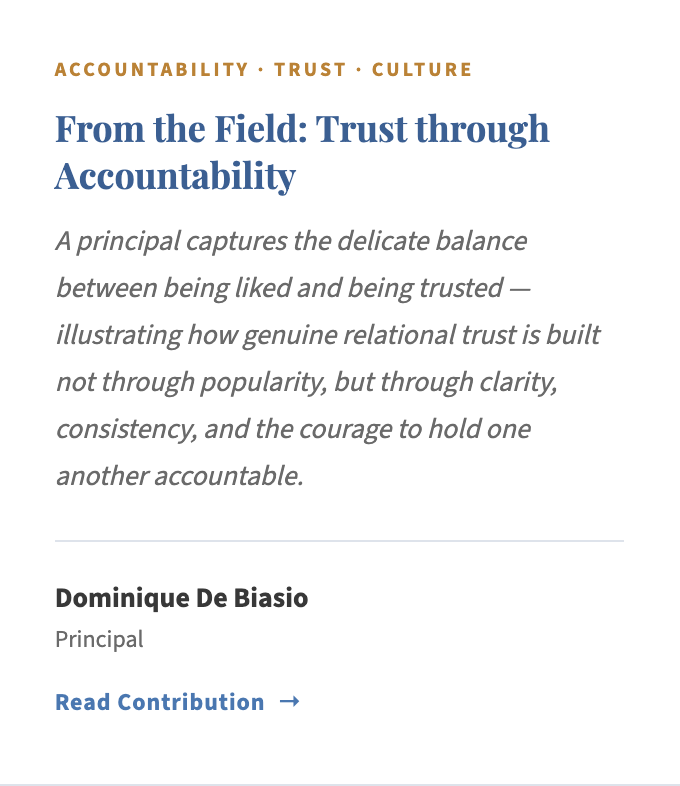
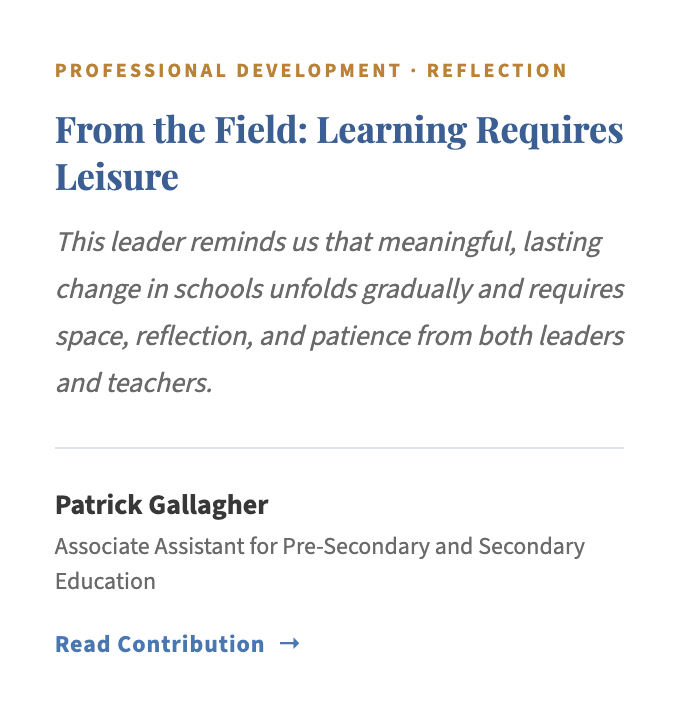
SUBMIT YOUR WORK
Your experience
belongs in this community.
This community exists because the best ideas for improving schools are already in schools. If you have led work that improved instruction, developed your faculty, increased student achievement or shifted your school's culture — and you've reflected on it with clarity and honesty — we want to hear from you.
Submissions are reviewed personally by David Corvi. Selected contributions are published on this site and featured on LinkedIn.
The Role of the Leader
How you understand and enact your role as the teacher of teachers
Tier 1 Instruction for Students
What you've done to improve the everyday classroom experience
Tier 1 for Faculty & Staff Development
How you've applied instructional principles to adult learning system-wide
Resources, Actions & Reflections
Tools you've used, decisions you've made, and what you learned from them
How to Submit
Please follow these directions carefully. Submissions that do not meet the standards below will not be reviewed.
1 Write Your Submission
Submissions must be 500–1,000 words, polished, and publish- ready. Anecdotal narratives and case studies are both welcome. Half-formed ideas are not accepted. Proofread carefully — submissions with significant errors will not be selected.
2 Compose Your Email
Send to david@fixtier1instruction.com with the subject line: Submission for Contribution. Include your full name, position title, and employer in the body of the email.
3 Paste Your Submission
Copy and paste your submission directly into the body of the email. Do not send attachments — they will not be opened.
Submission Standards
500–1,000 words, fully written and polished
Focused on one of the four topic areas to the left
Written from your own professional experience
Minimal to no errors — proofread before sending
A note on response time
Due to volume, only selected submissions will receive a response. If you have not heard back within 4 weeks, your submission was not selected for this cycle — but may be reconsidered in the future. David reserves the right to edit, excerpt, or reframe selected submissions, kept to a bare minimum.
VOL.
2
Looking Ahead
The strongest contributions will have a chance to appear in future editions of this work.
As this community grows, selected contributions will be considered for inclusion in future editions of Fix Your Tier 1 Instruction. Contributors whose work is selected for publication will receive a copy of the new edition. This is a long game — and the best ideas from the field deserve a permanent home.